KIA EV3 WINS NZ CAR OF THE YEAR

The Kia EV3 has been named the 2025 New Zealand Car of the Year, becoming the sixth all-electric vehicle to scoop New Zealand’s premier motoring award in the past seven years.

The EV3, a compact sport utility crossover, is also the first vehicle from South Korean brand Kia to secure the national Car of the Year crown in this country. 

Kia New Zealand managing director Todd McDonald credited the award to the efforts of the brand’s engineers, and their ongoing commitment to low-emission vehicles.

“This award is recognition of the amazing work Kia and its team all around the world are doing to shape the future of sustainable personal mobility, at the same time helping to make the planet a better place through innovative, clean and thought-provoking transport solutions,” said McDonald.

In announcing the EV3 as the 38th winner of its annual award, New Zealand Motoring Writers’ Guild president Matthew Hansen noted that national honours here follows significant international award success for the vehicle.

“The New Zealand trophy follows on from the EV3 winning World Car of the Year honours for 2025,” said Hansen. “But our award is the most relevant for New Zealanders, as an assessment of the EV3 from motoring writers from all across the country, who have assessed the vehicle on our local conditions.

“To win a Car of the Year crown, a vehicle must impress the Guild’s motoring experts for multiple reasons. In the case of the EV3, those reasons include its striking exterior design, a spacious and well-finished interior, leading edge technology, polished on-road manners, top safety rating, excellent range, and rapid charging capability.

“The EV3 builds on Kia’s strong electric vehicle foundations, established over several years with models like 2024 New Zealand Car of the Year nominee, the EV9. We recognise and congratulate Kia on the way it continues to sharpen and strengthen its line-up.”

The Kia EV3 beat out nine other finalists in the New Zealand Car of the Year awards. These other finalists were the: Audi A5; Cadillac Lyriq; Geely Starray EM-I; Mercedes-Benz G 580; MG QS; Mini Aceman; Nissan Ariya; Subaru Forester; Volkswagen ID. Buzz.

The New Zealand Car of the Year award is open to all new passenger vehicles launched over a 12-month period. To be eligible for the award they must have been evaluated by over two-thirds of the Guild’s voting members, with testing undertaken over each member’s local roads, not on a track. This allows voting to be based on the same experience an owner would have, using the car in their day-to-day life, in different parts of New Zealand. 

The Guild members evaluated all finalists against a range of criteria including how the vehicle performs its intended role; its styling, interior design and accommodation; fit, finish and quality; ride and refinement; performance; road-holding and handling; value for money; active and passive safety and environmental responsibility.

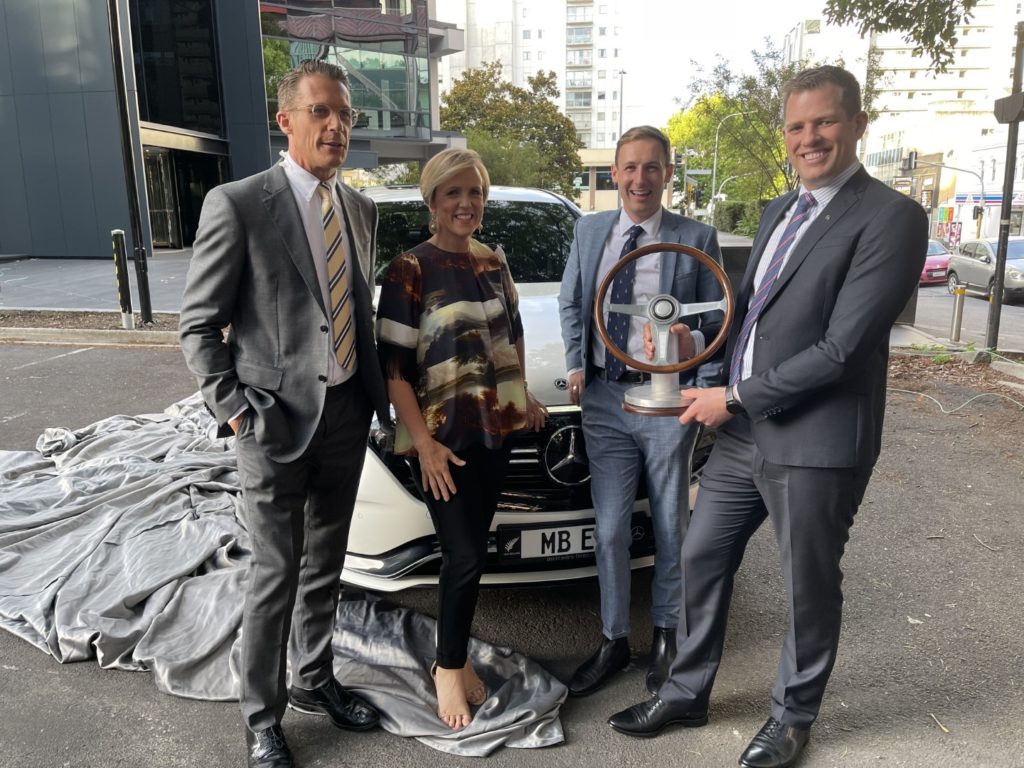
[feature image: Kia New Zealand managing director Todd McDonald (left) and New Zealand Motoring Writers’ Guild president Matthew Hansen]

NZ Car of the Year Winners

  • 1988 BMW 5 Series
  • 1989 Peugeot 405
  • 1990 Mazda MX-5
  • 1991 Lexus LS400
  • 1992 Toyota Corona
  • 1993 Citroen ZX
  • 1994 Honda Accord
  • 1995 Nissan Maxima
  • 1996 BMW 5 Series
  • 1997 Holden Commodore VT
  • 1998 Volkswagen Passat
  • 1999 Honda S2000
  • 2000 Mercedes C-class
  • 2001 Ford Mondeo
  • 2002 Mazda6
  • 2003 Honda Accord Euro
  • 2004 Nissan Maxima
  • 2005 Mazda MX-5
  • 2006 Porsche Cayman
  • 2007 Mazda2
  • 2008 Ford Falcon FG
  • 2009 Ford Fiesta
  • 2010 BMW 5 Series
  • 2011 Ford Focus
  • 2012 Toyota 86
  • 2013 Volkswagen Golf
  • 2014 Mazda3
  • 2015 BMW i3
  • 2016 Mercedes-Benz E-Class
  • 2017 Skoda Kodiaq
  • 2018 Subaru Forester
  • 2019 Jaguar I-Pace
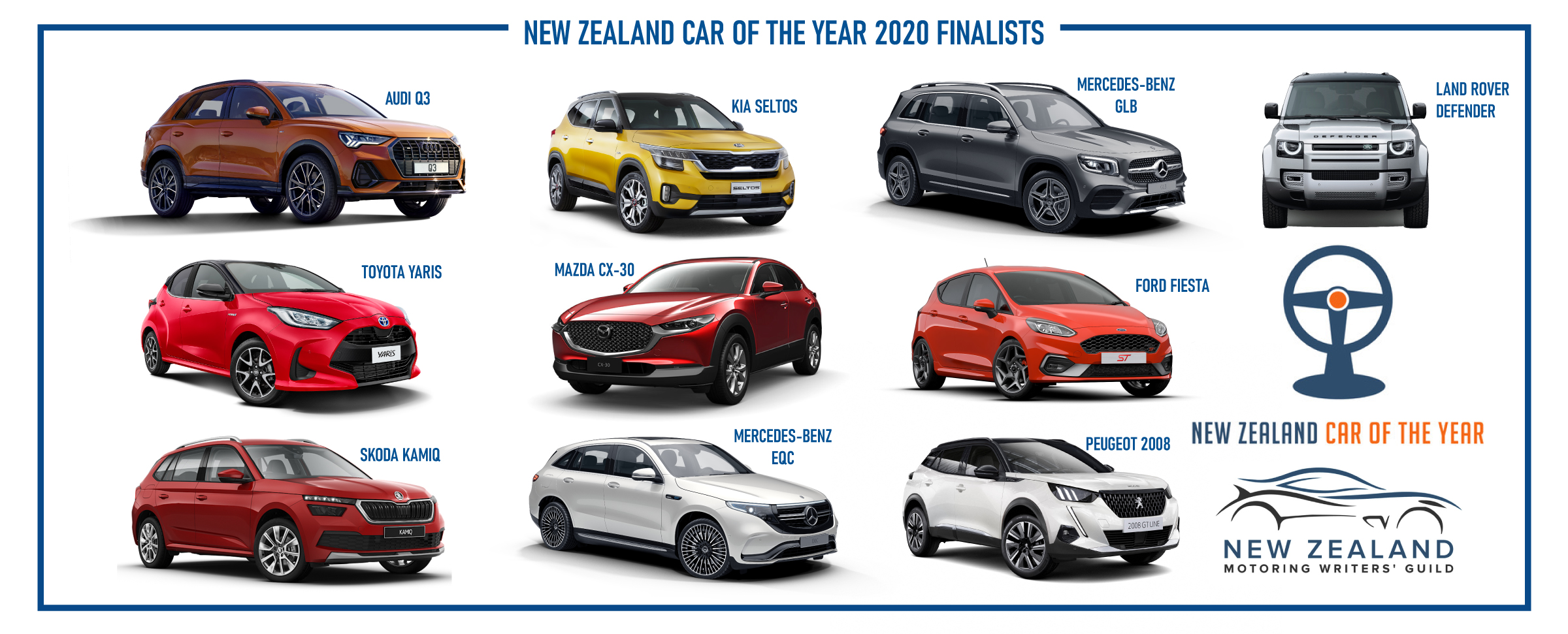
  • 2020 Mercedes-Benz EQC
  • 2021 Hyundai Ioniq 5
  • 2022 BYD Atto 3
  • 2023 MG4
  • 2024 Mercedes-Benz E-Class
  • 2025 Kia EV3

FINALISTS CONFIRMED FOR 2025 NZ CAR OF THE YEAR

Ten finalists have been announced for the 2025 edition of New Zealand’s most prestigious automotive prize, the New Zealand Car of the Year award (NZCOTY).

Representing automotive brands from Asia, the Americas and Europe, the finalists span a wide range of vehicle styles, but with SUVs and crossovers to the fore, and either full or partial electric power all but ubiquitous. Six of the 10 vehicles are only available in fully-electric guise, two land here only as hybrids, one is sold as either a hybrid or a petrol, and just one is solely powered by petrol.

Shortlisted from some three dozen all-new models released in the past twelve months, the 10 finalists to scoop this year’s New Zealand Car of the Year crown are, in alphabetical order:

  • Audi A5
  • Cadillac Lyriq
  • Geely Starray EM-i
  • Kia EV3
  • Mercedes G580
  • MG QS
  • Mini Aceman
  • Nissan Ariya
  • Subaru Forester
  • Volkswagen ID. Buzz

The Cadillac Lyriq, Kia EV3, Mercedes G580, Mini Aceman, Nissan Ariya and VW ID. Buzz are all pure electric vehicles. The Geely Starray EM-i is a plug-in hybrid, and the Subaru Forester is available as both a pure-petrol and self-charging hybrid. The MG QS is the only finalist sold here only as a pure-petrol model.

“While electrification is a common feature of all but one of the finalists, they otherwise represent significant variety,” says Motoring Writers’ Guild president Matthew Hansen.

“There are conventional cars, SUVs, and even – with the ID Buzz – a contemporary interpretation of the classic VW Combi.

“The Subaru Forester is the new generation of the model that won 2018 NZ  Car of the Year honours in its previous generation, the Kia EV3 is the current World Car of the Year, and the Cadillac Lyriq and Geely Starray EM-i are the first models from those brands to make the cut as New Zealand Car of the Year finalists.

“To have such a mixture of different price points, silhouettes and carmakers present amongst this year’s nominees underlines the exciting and fluid state of the motoring industry in 2025.”

There is a wide spread of price points represented by the finalists, with three models available for under $50K, and three carrying six-figure price tags.

The award’s winner will be decided by the Guild’s voting members over the coming months and announced on TVNZ One’s Seven Sharp programme in February.

Guild members assess the finalists on a specified range of criteria spanning how the vehicle performs its intended role; its styling, interior design and accommodation; fit, finish and quality; ride and refinement; performance; road-holding and handling; value for money; active and passive safety and environmental responsibility.

NZCOTY is the country’s longest-running motoring award. Having been delivered annually since 1988, it is the only fully national motoring prize and is also celebrated for being free from commercial involvement. The current holder is the Mercedes-Benz E-Class.

Previous New Zealand Car of the Year Winners

1988 BMW 5 Series
1989 Peugeot 405
1990 Mazda MX-5
1991 Lexus LS400
1992 Toyota Corona
1993 Citroen ZX
1994 Honda Accord
1995 Nissan Maxima
1996 BMW 5 Series
1997 Holden Commodore VT
1998 Volkswagen Passat
1999 Honda S2000
2000 Mercedes C-class
2001 Ford Mondeo
2002 Mazda6
2003 Honda Accord Euro
2004 Nissan Maxima
2005 Mazda MX-5
2006 Porsche Cayman
2007 Mazda2
2008 Ford Falcon FG
2009 Ford Fiesta
2010 BMW 5 Series
2011 Ford Focus
2012 Toyota 86
2013 Volkswagen Golf
2014 Mazda3
2015 BMW i3
2016 Mercedes-Benz E-Class
2017 Skoda Kodiaq
2018 Subaru Forester
2019 Jaguar I-Pace
2020 Mercedes-Benz EQC
2021 Hyundai Ioniq 5
2022 BYD Atto 3
2023 MG4
2024 Mercedes-Benz E-Class

MERCEDES-BENZ E-CLASS SCOOPS CAR OF THE YEAR CROWN

The latest iteration of Mercedes-Benz’s E-Class saloon has been named New Zealand’s 2024 Car of the Year.

Following in the footsteps of the previous E-Class, which won the 2016 title, the new E-Class beat ten rival finalists to lift the trophy, which is awarded by the New Zealand Motoring Writers’ Guild, the professional body for motoring media from around the country.

Kiwi honours follow overseas success for the latest E-Class, which just last month was awarded the “Best Performer” in 2024 by the European NCAP safety assessors, as the safest car subject to the rigorous NCAP crash test and safety assessment regime last year.

“World-leading safety credentials are but one of many features that helped the new E-Class stand out from very talented rivals for our 2024 Car of the Year crown,” says Guild of Motoring Writers president Robert Barry.

“In an era when many new cars feature blunt, assertive styling, the E-Class is sleekly styled to achieve to-tier aerodynamic efficiency. This and its mild-hybrid powertrain optimise fuel efficiency, but not at the expense of performance, which is more than adequate to fill its brief as an effortless long-distance tourer.”

“Add in outstanding refinement, a sumptuous interior, and the latest in AI-enabled driver support systems, and the E-Class is, above all else, a great all-rounder.”

It’s also important to acknowledge that the latest E-Class is the latest of several Mercedes-Benz vehicles to win the NZ Car of the Year crown. These comprise the smaller C-Class saloon in 2000, the previous E-Class in 2016, and the wholly electric EQC in 2020.

We are honoured to receive this award and sincerely thank the Guild members for recognising the exceptional qualities of the new E-Class. This accolade is a testament to Mercedes-Benz’s commitment to delivering unparalleled design, cutting-edge technology and award-winning safety. We appreciate the Guild’s recognition for everything the new E-Class offers,” says Mercedes-Benz New Zealand general manager, Joerg Schmidt.

The prestigious award, now in its 36th year, was announced live on Seven Sharp by presenters Hilary Barry and Jeremy Wells.

The finalists for this year’s award, in alphabetical order, were:

  • Honda CR-V
  • Hyundai Santa Fe
  • Kia EV9
  • Mercedes-Benz E-Class
  • MG 3
  • Polestar 4
  • Subaru Solterra / Toyota bZ4X
  • Suzuki Swift
  • Toyota C-HR
  • Volvo EX30

The Guild’s voting members tested the vehicles in their home environments across the country, which is essential for providing a ‘real-world’ result. They assessed the finalists on a specified range of criteria, including how the vehicle performs its intended role, its styling, interior design, and accommodation, fit, finish, and quality, ride and refinement, performance, road-holding and handling, value for money, active and passive safety, and environmental responsibility.

Previous New Zealand Car of the Year Winners

2023 MG4

2022 BYD Atto 3

2021 Hyundai Ioniq 5

2020 Mercedes-Benz EQC

2019 Jaguar I-Pace

2018 Subaru Forester

2017 Skoda Kodiaq

2016 Mercedes-Benz E-Class

2015 BMW i3

2014 Mazda3

2013 Volkswagen Golf

2012 Toyota 86

2011 Ford Focus

2010 BMW 5 Series

2009 Ford Fiesta

2008 Ford Falcon FG

2007 Mazda3

2006 Porsche Cayman

2005 Mazda MX-5

2004 Nissan Maxima

2003 Honda Accord Euro

2002 Mazda6

2001 Ford Mondeo

2000 Mercedes-Benz C-Class

1999 Honda S2000

1998 Volkswagen Passat

1997 Holden Commodore VT

1996 BMW 5 Series

1995 Nissan Maxima

1994 Honda Accord

1993 Citroën ZX

1992 Toyota Corona

1991 Lexus LS400

1990 Mazda MX-5

1989 Peugeot 405

1988 BMW 5 Series

NZ Car Of The Year 2024 finalists announced

Eleven cars representing ten manufacturers have been selected as finalists for the 2024 edition of the prestigious New Zealand Car of the Year award.

The selection embraces variety, spanning small cars, luxury cars, SUVs, fully electric, hybrid, and pure-petrol choices, and price points from under $30K to six figures.

Five fully battery-dedicated models feature, and another four fully embrace hybrid technology. The remaining two have both hybrid and pure petrol offerings within the range.

This shows that, despite reduced interest in electric vehicles on the sales charts over the past 12 months, the Car of the Year award’s administrator, the New Zealand Motoring Writers’ Guild, sees battery-involved mobility becoming ubiquitous in passenger cars.

“Whether it’s the fully electric experience, plug-ins, or self-contained hybrid systems so subtle that some drivers may not even know they are operating, we drive in an increasingly electric world,” says NZ Motoring Writers Guild president Robert Barry.

“That is being decided for us on a global scale.”   

The finalist candidates are the Honda CR-V, Hyundai Santa Fe, Kia EV9, Mercedes-Benz E-Class, MG 3, Polestar 4, Subaru Solterra / Toyota bZ4X, Suzuki Swift, Toyota C-HR, and Volvo EX30, in alphabetical order.

The latest Honda CRV and MG3 are in pure petrol and hybrid versions. The new Hyundai Santa Fe, the latest Toyota C-HR, the fourth-generation Suzuki Swift, and the 2024 iteration of the Mercedes E-Class are all fully hybrid models, the latter two with relatively gentle mild hybrid assist.

The Kia EV9, Polestar 4, Subaru Solterra/Toyota bZ4X and Volvo EX30 are all pure electric machines.

Particular to the 2024 finalists list is the single listing for the Toyota bZ4X and Subaru Solterra.

“The car was a conjoined effort by these brands, each with its product line, which we find to be common for all but minor specification and styling amendments, so therefore, in our eyes, the two stand as one,” Barry says.   

As usual, this latest crop of finalists has been selected from a more comprehensive list of all-new models launched in New Zealand in the past 12 months.

Guild members nationwide will continue evaluating the finalists into early 2025. In February 2025, the winner will be announced live on TVNZ One’s Seven Sharp programme.

Guild members assess the finalists on a specified range of criteria, including how the vehicle performs its intended role, its styling, interior design, and accommodation, fit, finish, and quality, ride and refinement, performance, road-holding and handling, value for money, active and passive safety, and environmental responsibility.

The winning finalist will follow the current titleholder, the MG4, to become New Zealand’s latest Car of the Year and the 37th new model to secure the country’s most prestigious new car honour.

MG powers to New Zealand Car of the Year crown
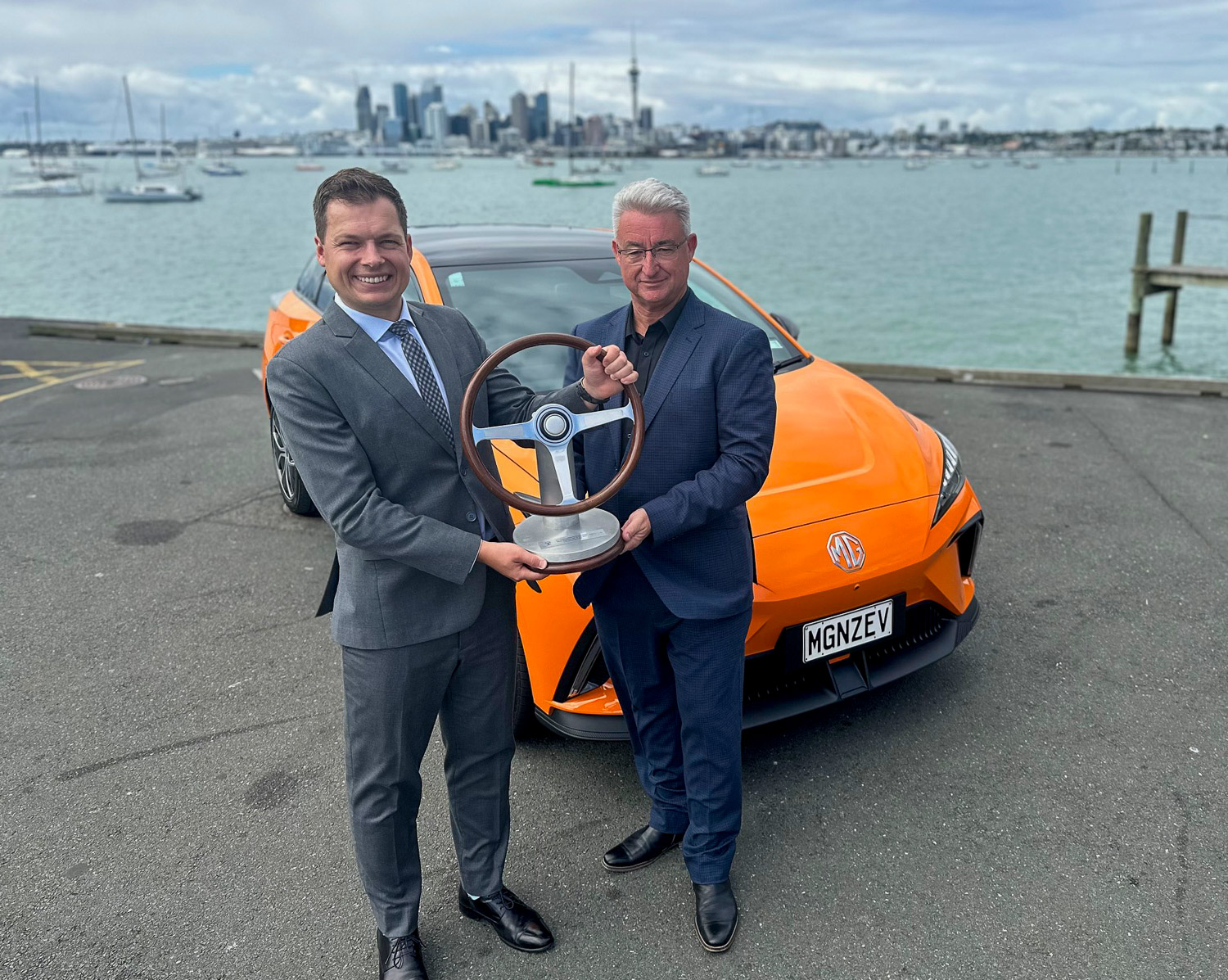
The MG4 compact hatchback has claimed the 2023 New Zealand Car of the Year title, the fifth EV in a row to claim the prestigious independent award.

The first all-electric range to be launched in New Zealand by MG, the MG4 is the first of a raft of new-generation products heading our way from the now Chinese-owned brand with an English heirloom name.

When it first launched here the MG4 line-up comprised four two-wheel-drive variants, with a key differentiator being different-sized battery packs ranging from 51 to 77kWh, along with a progressively more powerful electric motor matched to the larger batteries. The MG4 line has since been augmented by a dual-motor, four-wheel-drive performance flagship, the 320kW/600Nm MG4 XPower.

The New Zealand Car of the Year is selected by members of the New Zealand Motoring Writers’ Guild, the professional body for motoring media from around the country.

“Even before the extraordinarily powerful flagship version arrived, the MG4 was making waves here, not only amongst the buying public but also amongst the country’s professional motoring journalists,” says the Guild’s President, Robert Barry.

“As far as the MG brand is concerned, this model has ushered in a new era of fully contemporary design, on the company’s first all-electric vehicle platform, and with leading-edge battery technology that gives 77kW battery version in particular an outstanding real-world range.

“We have all admired the design, technology, and practicality of the MG4, but how it drives has also impressed the motoring writers. Part of its dynamic charm comes from the mainstream variants being rear rather than front-drive; this combines with the low centre of gravity and excellent weight distribution achieved by the positioning of its battery to give a crisp handling balance,” he says

Arek Zywot, MG New Zealand Country Manager, says the company is beyond thrilled that New Zealand Motoring Writers Guild members have deemed the MG4 worthy of Car of the Year success.

“We’re deeply honoured to receive this award for the MG4, which I consider to be a great recognition of our hard work and dedication to creating the best product on the market. It is a groundbreaking new model for the MG marque and is indicative of the future direction of attainable, electrified motoring. It has proven itself on the world stage as an international multi-award-winning model and it is now receiving similar accolades here in New Zealand.

“I challenge anyone who thinks electric vehicles are boring to take a drive in the MG4, I know it can change opinions and certainly made a positive impression on Guild members across the country,” he said.

The prestigious award, now in its 35th year, was announced live on Seven Sharp by presenters Hilary Barry and Jeremy Wells.

Candidates for this year’s award, in alphabetical order, were:

  • BMW i7
  • Cupra Born
  • Ford Mustang Mach-E
  • Hyundai Ioniq 6
  • Lexus RZ
  • Mercedes-Benz EQE sedan
  • MG4
  • Nissan X-Trail
  • Peugeot 308
  • Skoda Enyaq

The Guild’s voting members tested the vehicles in their home environments across the country – important for providing a ‘real world’ result. They assessed the finalists on a specified range of criteria spanning how the vehicle performs its intended role; its styling, interior design and accommodation; fit, finish and quality; ride and refinement; performance; road-holding and handling; value for money; active and passive safety and environmental responsibility.

The list of previous Car Of The Year winners is located here.

Feature image: New Zealand Motoring Writers’ Guild President, Robert Barry (right), hands over the trophy to Arek Zywot, MG New Zealand Country Manager.
Top 10 finalists announced for 2023 New Zealand Car of the Year 

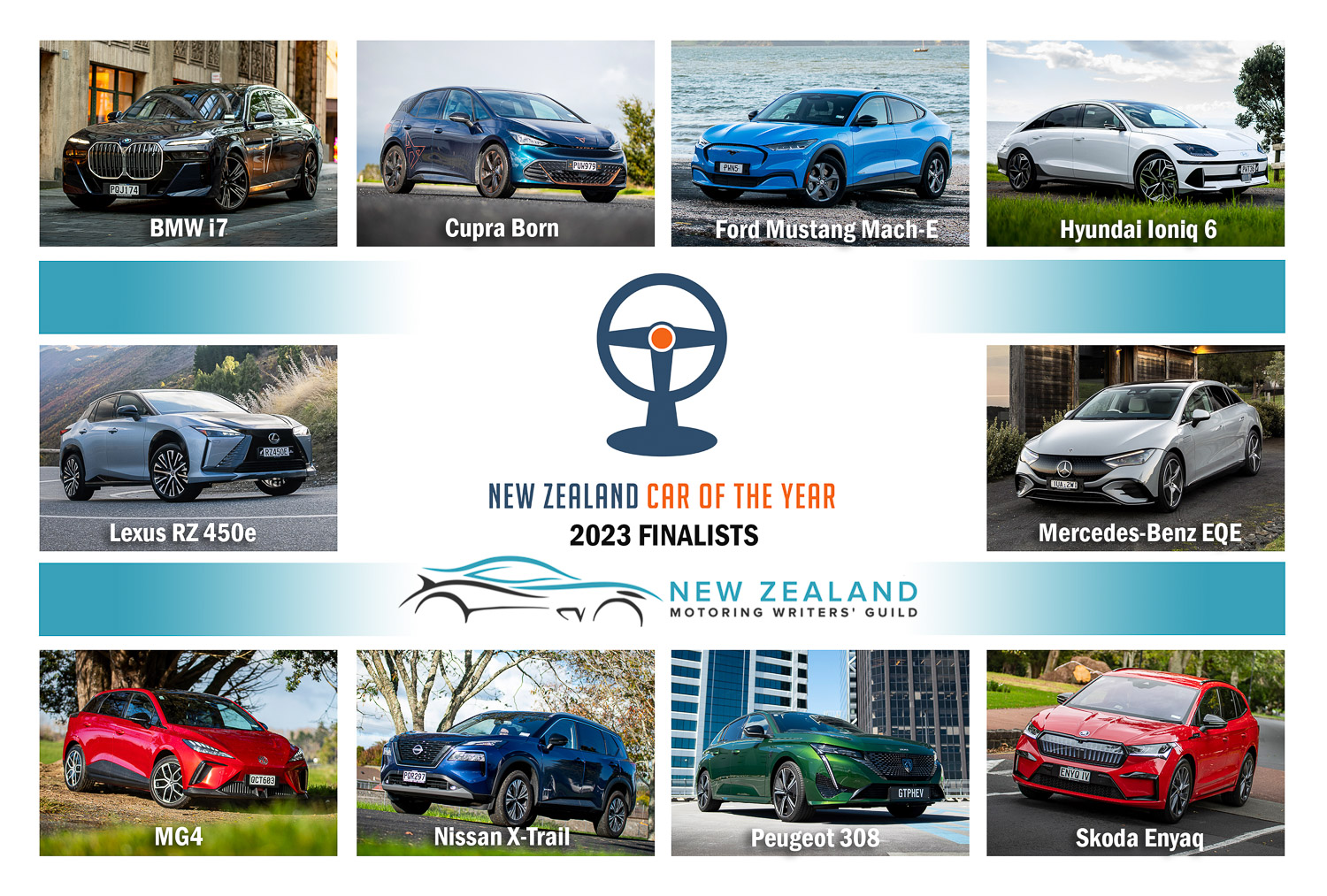
Ten cars representing 10 brands have made the cut as finalists for the 2023 edition of the prestigious New Zealand Car of the Year, and for the first time in the award’s history, all embrace electrification.

Eight fully battery-dedicated models feature (up from six in 2022), along with two more that have hybrid options within their respective ranges. 

In alphabetical order, the candidates are: BMW i7, Cupra Born, Ford Mustang Mach-E, Hyundai Ioniq 6, Lexus RZ, Mercedes-Benz EQE sedan, MG4, Nissan X-Trail, Peugeot 308, Skoda Enyaq.

Amongst the finalists, the BMW i7, Cupra Born, Ford Mustang Mach-E, Hyundai Ioniq 6, Lexus RZ, Mercedes-Benz EQE, MG4 and Skoda Enyaq are fully electric and purpose-designed for batteries. The Peugeot 308 range includes a plug-in hybrid version, while the e-Power version of Nissan’s X-Tail takes an innovative approach to conventional hybrid motoring.

Seeing electric vehicles come to the fore for New Zealand Car of the Year is not in itself new, but this is the first time in the award’s history that every one of the finalists is either a pure EV, or is available in hybrid form.

The first electric-powered model to achieve New Zealand Car of the Year was the BMW i3, in 2015. That was a range extender version with small supplementary petrol engine acting as a power generator. The prize has since gone to four fully electric cars. The Jaguar i-Pace achieved the 2019 award, Mercedes-Benz EQC took the 2020 prize, the Hyundai Ioniq 5 triumphed in 2021, and the BYD ATTO3 is the current holder.

Now entering its 36th year, New Zealand Car of the Year has firm industry recognition as country’s most prestigious motoring award. It is a truly national prize without commercial ties or influence. 

To be considered as a finalist, a vehicle must have been launched in New Zealand as an all-new model in the past 12 months, 

The award’s winner will be decided by the Guild’s voting members over the coming months and announced in February next year.

Finalists are assessed on a specified range of criteria spanning how the vehicle performs its intended role; its styling, interior design and accommodation; fit, finish and quality; ride and refinement; performance; road-holding and handling; value for money; active and passive safety and environmental responsibility.

New Zealand Motoring Writer’s Guild president Robert Barry says the top 10 contenders reflect the sophisticated engineering which underpins the automotive manufacturers’ drive to full electrification of their brands.

“Although the BMW i7 is purpose-designed as an EV, the 7-Series has a common body represented by the 740i mild hybrid and the PHEV-configured 750e,” Barry says.

“Locally the Peugeot 308 is sold either with a turbocharged petrol engine or as a plug-in hybrid, and in overseas markets there is also a battery electric version available, which further reflects the flexibility of modern vehicle platforms.

“Five of the battery electric vehicles under consideration also offer variants that currently meet the threshold for the $7015 Clean Car Rebate until December 31, with the 51kWh MG4 Excite priced from $46,990 (before rebate), which shows that manufacturers are also achieving price parity with non-electrified vehicles,” he says.

BYD Atto 3 named New Zealand Car of the Year

NAMING of the BYD Atto 3 as New Zealand Car of the Year stands as an affirmation of China’s emergence as a powerhouse maker of electric cars, most for everyday motorists.

In announcing the compact fully-electric compact five-seater as 35th winner of its annual award, the New Zealand Motoring Writers’ Guild believes its COTY is a global first for the ‘Build Your Dreams’  brand.

“Atto 3 has won category awards, including in this country, but our award appears to be the maiden national car of the year for this model and for BYD,” says Guild president Richard Bosselman.

“Securing the country’s most prestigious, longest-running, and important industry award is huge, but this is particularly special recognition.

“NZ was one of BYD’s first export destinations – the brand was little known, Atto 3 is their only car here and has been on sale for less than a year.

“For it to have made such a powerful impact so immediately is quite something.”

Atto 3’s affordability was a factor recognised by the judges when determining it to be the best of 12 high-quality finalists, all chosen from a much broader count of product released nationally over the past calendar year.

“Atto 3 resonates as a product competing for the attention of budget-minded buyers through offering good range from an advanced battery,” Bosselman says.

“The Guild also recognises it as a solidly-engineered car, offering good technologies and an interesting styling approach.”

In two specifications respectively pricing at just over $50,000 and just under $54,000 when the Government’s Clean Car rebate is applied, Atto 3 is in a lower spending band than the three previous electric cars honoured by the Peter Greenslade Trophy.

That’s a reminder of how bullish China’s electric car industry is, Bosselman says.

“The EV sector moves at a rapid pace and this year NZ will see some exciting new product from other global involvers, but China remains one to watch.

“Adoption of ‘new-energy vehicles’ is a domestic priority and an increasing count of makers there are exporting.

“BYD has enjoyed colossal growth and reaped spectacular rewards. It was the world’s biggest seller of battery electric vehicles and plug-in hybrids in 2022 with a total of 1.86 million sales – the vast majority in China. It was well ahead of top rival, Tesla.”

The brand itself only founded in 1995, to make batteries for consumer electronics then branched into car production in 2002.

Key to BYD’s success has been its battery technology – known as the ‘blade’ due to the long, thin shape – which uses only lithium, iron and phosphate, materials that are all abundant in the Earth’s crust, while avoiding controversial metals such as cobalt and nickel.

“BYD Auto New Zealand is incredibly proud to receive this award,” says Warren Willmot, national brand manager.

“Our customers have taken a leap of faith with a new brand, of which most of wouldn’t have heard of seven months ago. This award cements their purchasing decision was in line with expert opinions.”

The car’s acceptance of over-the-air software updates ensures it “will get better the longer you own the vehicle. Every update brings new features and refinement. Our early customers have all now received their Vehicle to Load adapters (free with every car) and our BYD App is due to roll out shortly.

“Every BYD Atto 3 on the road potentially replaces an internal combustion engine vehicle, moving us towards a Greener future and BYD’s ultimate global goal of cooling the Earth by one degree.”

Judges considered how a vehicle performs its intended role; its styling, interior design and accommodation; fit, finish and quality; ride and refinement; performance; road-holding and handling; value for money; active and passive safety and environmental responsibility.

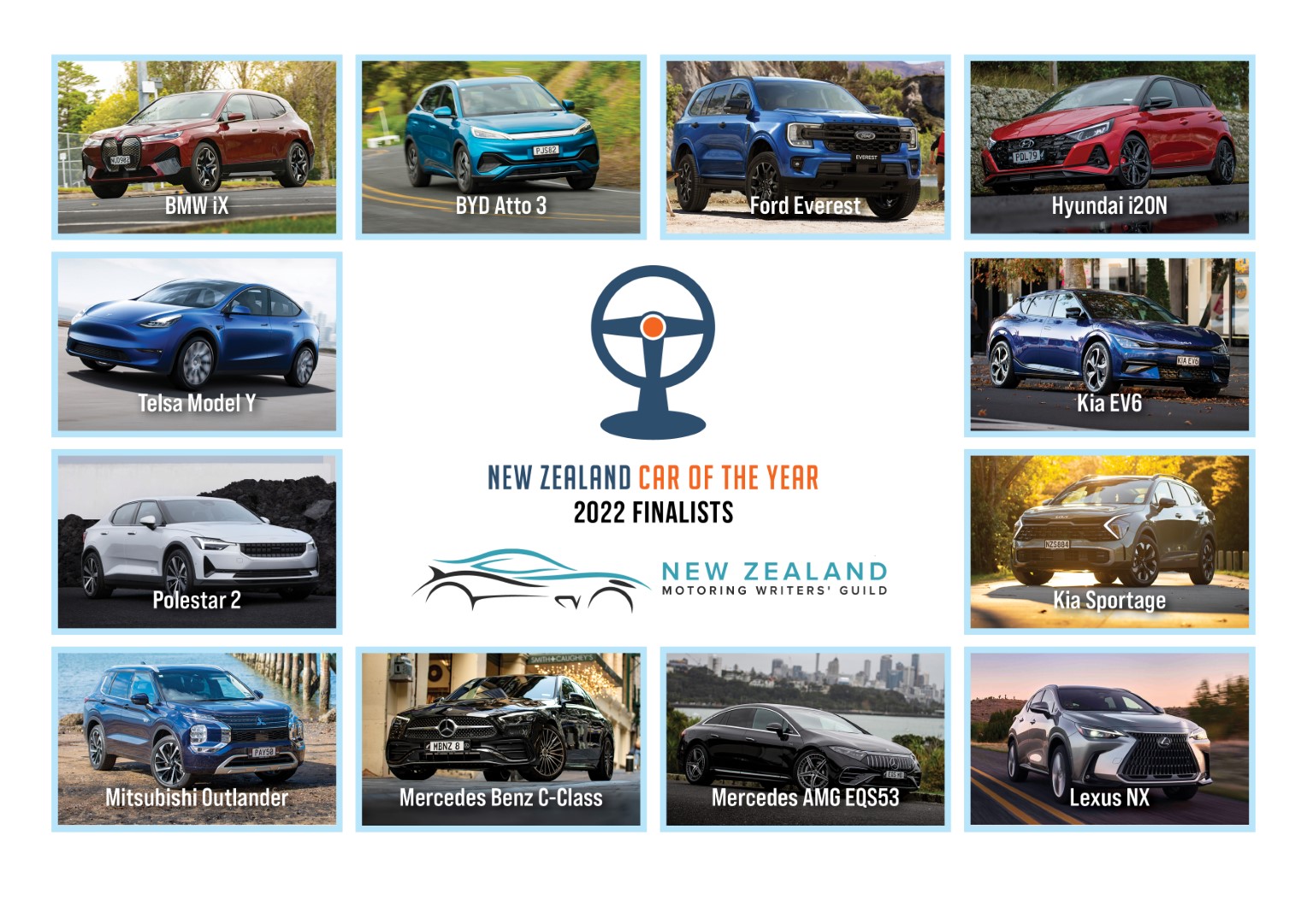
Also in the hunt were the BMW iX, Ford Everest, Hyundai i20 N, Kia EV6 and Kia Sportage, Lexus NX, Mercedes-AMG EQS 53 and Mercedes-Benz C-Class, Mitsubishi Outlander, Polestar 2 and Tesla Model Y.

Said Bosselman: “That we elected to consider 12 finalists for the 2022 award rather than the usual top 10 says much. There is one winner, but my sentiment is there were no poor choices.”

The award is open to all passenger vehicles launched over a 12-month period. Finalists required evaluation on a full road test by more than two-thirds of the 20 voting members.

The Peter Greenslade Trophy recognizes the memory and contribution of the late Peter Greenslade, a highly respected New Zealand motoring writer.

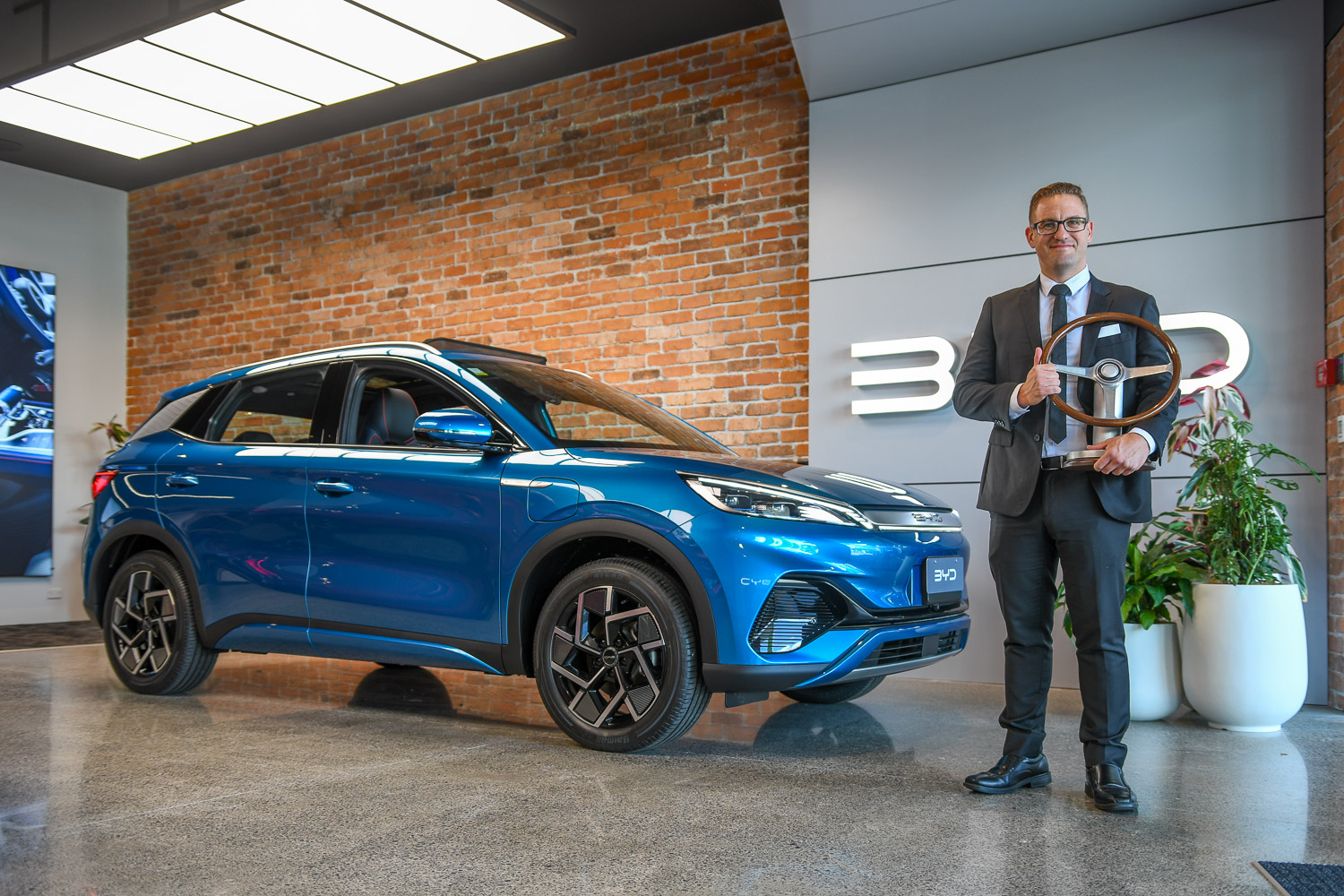
Feature image: Warren Willmot, brand manager BYD Auto New Zealand, with the Peter Greenslade Trophy, the New Zealand Car of the Year award, decided annually by the New Zealand Motoring Writers’ Guild.

NZ  COTY 2022 FINALISTS ANNOUNCED

TWELVE cars representing 10 brands have made the cut as finalists for the 2022 edition of the prestigious New Zealand Car of the Year, most embracing electrification.

Six fully battery-dedicated models feature, along with three more that have hybrid options within their respective ranges.

Importance of battery-involved mobility has been increasingly obvious to the administrator of the annual award, the New Zealand Motoring Writers’ Guild, says president Richard Bosselman.

“The finalist selection again underscores the rapid addition of electrified options to the country’s new car model lists.”

Competition for the 2022 prize has nonetheless seen a resurgence from the combustion engine quarter, with a hot hatch and two sports utilities, a reminder the market continues to be in transition.

In alphabetical order, the candidates are:

BMW iX; BYD Atto 3; Ford Everest Hyundai i20 N; Kia EV6 and Sportage; Lexus NX; Mercedes-AMG EQS 53 and Mercedes-Benz C-Class; Mitsubishi Outlander; Polestar 2 and Tesla Model Y.

The BMW iX, BYD Atto 3, Kia EV6, Mercedes-AMG EQS, Polestar 2 and Tesla Model Y are fully electric and purpose-designed for batteries.

The Mercedes-Benz C-Class, Mitsubishi Outlander and Lexus NX all avail in mains-replenished plug-in hybrid guise. The Lexus also delivers in mild hybrid; the Mercedes and Mitsubishi also in combustion engine forms.

Contenders considered in internal combustion are the Kia Sportage, the Hyundai i20 N compact petrol performance hatchback and the Ford Everest, a seven-seater diesel sports utility wagon, related to the Ford Ranger one-tonne utility that is highly popular here.

“Seeing electric vehicles come to the fore for New Zealand Car of the Year is not in itself new – of last year’s 10 finalists, all but one ‘battery-included’,” says Bosselman.

“Having as finalists six cars that are available solely with electric power does set a new benchmark for the award.”

The first electric-powered model to achieve New Zealand Car of the Year, represented by the Peter Greenslade Trophy, was the BMW i3, in 2015. That was a range extender version with a petrol engine acting as a power generator.  

The prize has since gone to three fully electric cars. Jaguar i-Pace achieved the 2019 status, Mercedes-Benz EQC took the 2020 prize and Hyundai Ioniq 5 is the current holder.

Now entering its 35th year, New Zealand Car of the Year has firm industry and public recognition as the country’s most prestigious motoring award. It is a truly national prize without commercial ties or influence.

To be considered as a finalist, a vehicle must have been launched in New Zealand as an all-new model in the past 12 months,

Twenty judges have been involved this year, with evaluations continuing into early 2023. The winner is announced live on TVNZ One’s Seven Sharp programme in February 2023.

Guild members assess the finalists on a specified range of criteria spanning how the vehicle performs its intended role; its styling, interior design and accommodation; fit, finish and quality; ride and refinement; performance; road-holding and handling; value for money; active and passive safety and environmental responsibility.

Lightning strikes three times – EV takes New Zealand Car of the Year three years in a row

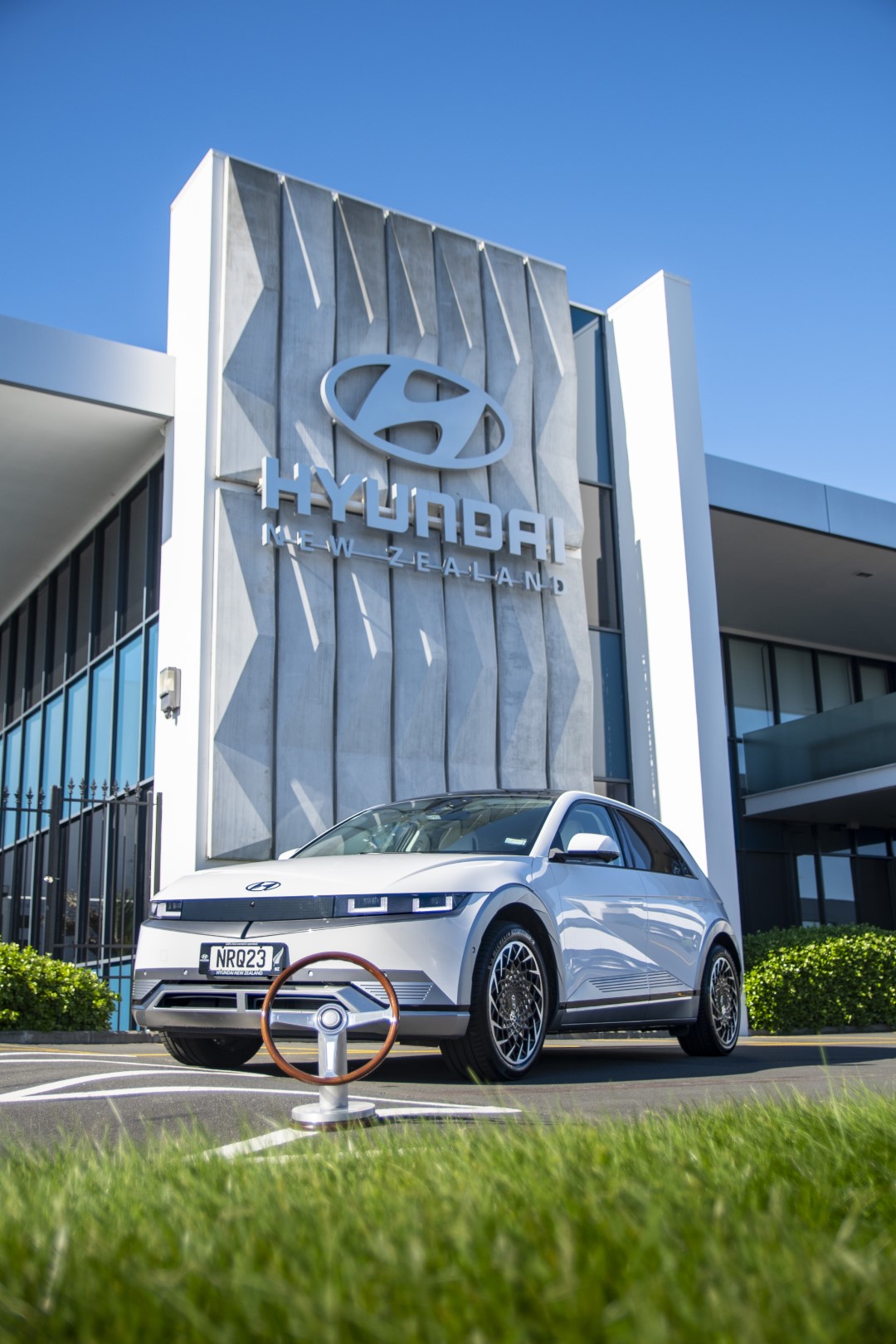
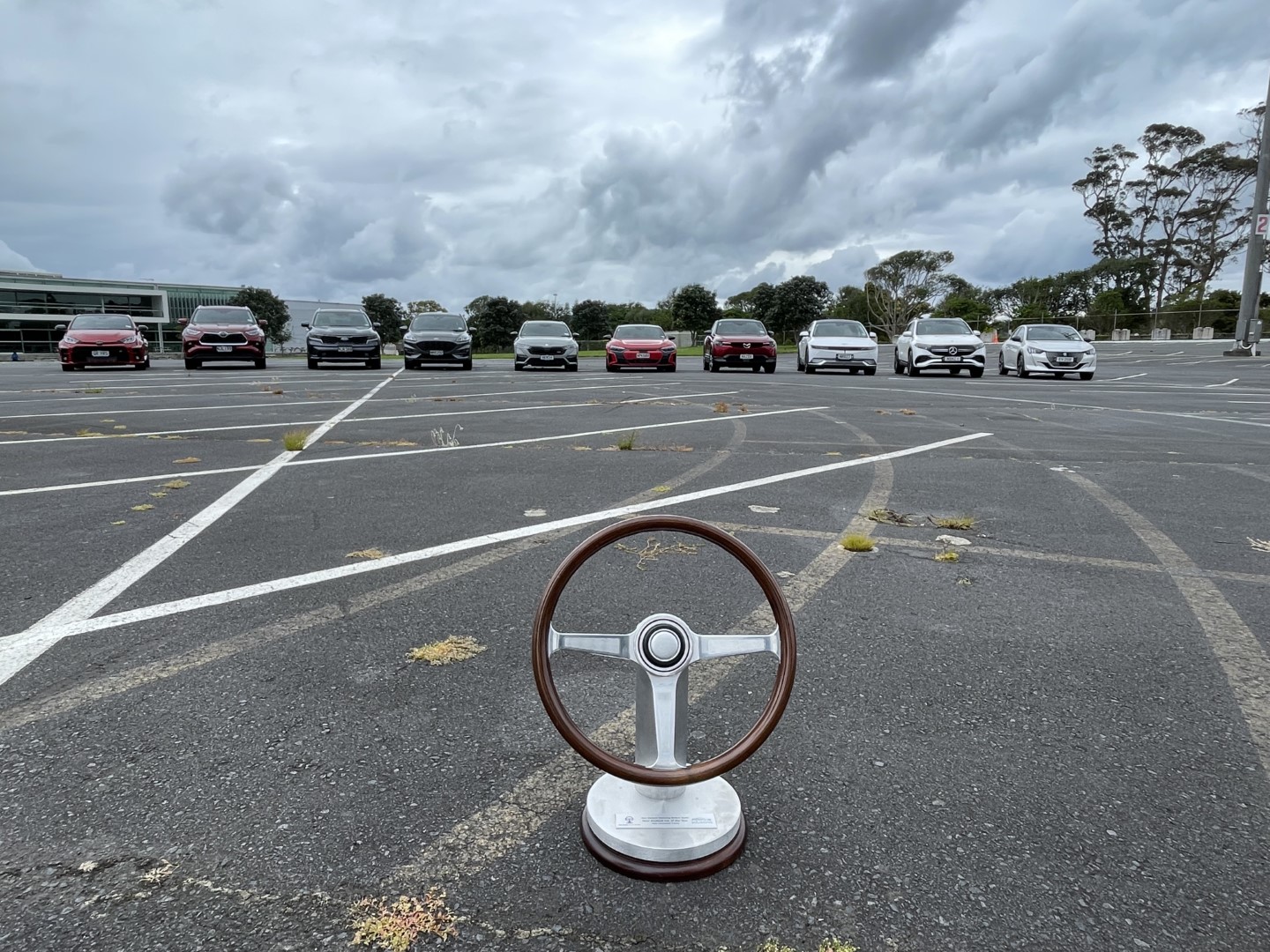
The all-electric Hyundai IONIQ 5 has claimed the 2021 New Zealand Car of the Year title, the third EV in a row to claim the prestigious award.

The IONIQ 5 is also the first winner of the award to be available under the government’s ‘Clean Car’ scheme, with its entry-level variant eligible for an $8,650 rebate.

The IONIQ 5 is the first Hyundai built on a new, fully dedicated electric platform, and features technology that allows for a range of up to 500km for premium variants and high-speed charging able to add 85km of range in just five minutes on the new generation of hyperchargers. It’s also a powerful and brisk performer, with the flagship variant’s dual-motor electric system mustering 225kW of power and 605Nm of torque, which in turn delivers a 0-100kph sprint time of just 5.22 seconds.

Previous all-electric winners of the award were the Mercedes-Benz EQC in 2020 and the Jaguar I-Pace in 2019.

The New Zealand Car of the Year is selected by members of the New Zealand Motoring Writers’ Guild, the professional body for motoring journalists and content creators from around the country. The Guild’s two-dozen voting members test the vehicles in their home environment – important for providing a ‘real world’ result.

New Zealand Motoring Writers’ Guild president Richard Edwards notes the IONIQ 5 is a game-changing vehicle.

“The Hyundai IONIQ 5 is very deserving of the New Zealand Car of the Year.”

“It is truly mould-breaking, without sacrificing efficiency, practicality or attractiveness. It is an all-round intriguing car even before you consider its exceptional all-electric drivetrain.”

Guild Secretary and DriveLife journalist, Fred Alvrez, lauded the car for its ‘clean sheet’ approach.

“The IONIQ 5 goes to show what a car manufacturer can do when they start with a clean sheet and create a car that’s an EV from the ground up. It drives brilliantly.”

David Thomson, motoring editor of the Otago Daily Times, notes the IONIQ 5’s green credentials go beyond its electric drivetrain.

“It’s easy to overlook its wider contribution to a more sustainable motoring future, most notably in the use of eco-friendly materials. These include bio-paints, the use of recycled plastics in the seat material, and by-products from sugar cane production for the roof headliner, carpet and seats.”

For locally-owned Hyundai New Zealand, the 2021 award is the first time it has claimed the New Zealand Car of the Year title. It is also the first time a Korean vehicle has claimed the trophy, which is named in honour of founding Guild member, Peter Greenslade.

“IONIQ 5 receiving this award in such a highly competitive environment is immensely rewarding”, says Hyundai New Zealand General Manager, Chris Blair.

“The IONIQ 5 eco-friendly interior, coupled with zero emissions, demonstrates Hyundai’s commitment towards leading the way in sustainable motoring”

“This model represents the new era of electric vehicles for our brand. It’s the first model to be released under the IONIQ brand line-up, and so if this announcement is anything to go by then we’re in for a real treat when IONIQ 6 and 7 reaches our shores.”

The prestigious award, now in its 33rd year, was announced live on Seven Sharp by presenters Hilary Barry and Jeremy Wells.

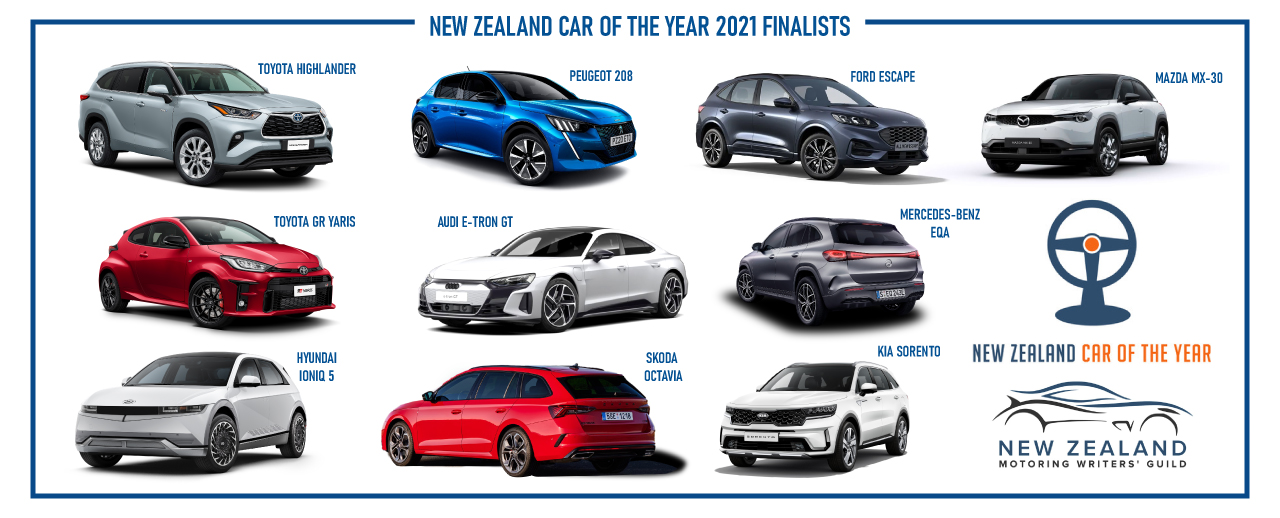
Candidates for the 2021 award, in alphabetical order, were:

  • Audi e-tron GT
  • Ford Escape
  • Hyundai IONIQ 5
  • Kia Sorento
  • Mazda MX-30
  • Mercedes-Benz EQA
  • Peugeot 208
  • Skoda Octavia
  • Toyota Highlander
  • Toyota GR Yaris

Guild members assess the finalists on a specified range of criteria spanning how the vehicle performs its intended role; its styling, interior design and accommodation; fit, finish and quality; ride and refinement; performance; road-holding and handling; value for money; active and passive safety and environmental responsibility.

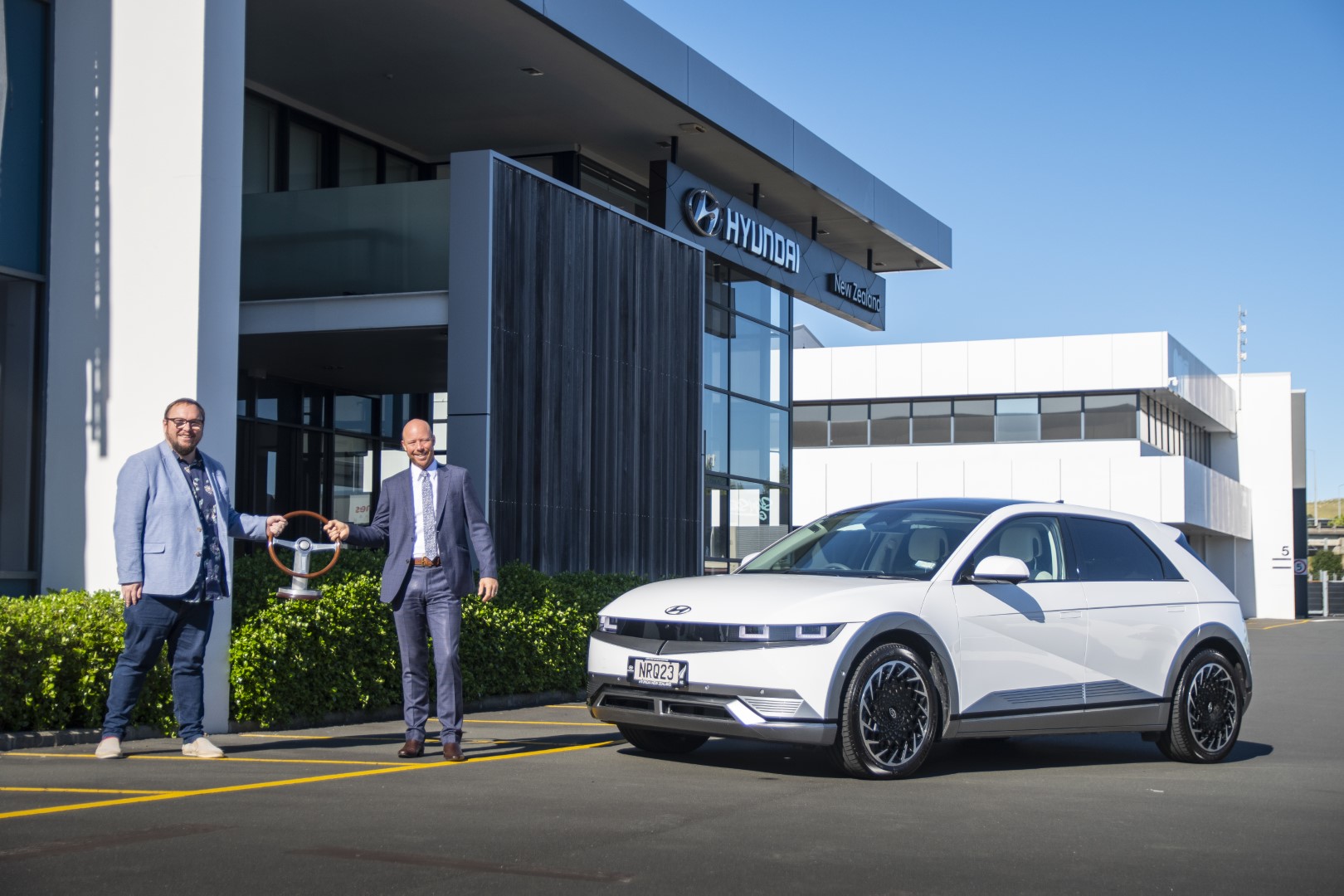
Hyundai New Zealand General Manager, Chris Blair (left) and NZ Motoring Writers’ Guild President, Richard Edwards

ELECTRIC POWER TO THE FORE AMONGST COTY FINALISTS

Electric vehicles dominate the finalists list for the 2021 edition of New Zealand’s most prestigious automotive award, the New Zealand Car Of The Year award (COTY), with no fewer than five of the 10 contenders available as pure electric vehicles, and all but one of the remaining five available in hybrid guise.

While this year’s mix of finalists for the New Zealand Car of the Year, chosen by members of the New Zealand Motoring Writers’ Guild, underscores the rapid addition of electrified options to the country’s new car model lists.

Candidates to scoop this year’s New Zealand Car of the Year crown are, in alphabetical order:

  • Audi e-tron GT
  • Ford Escape
  • Hyundai Ioniq 5
  • Kia Sorento
  • Mazda MX-30
  • Mercedes-Benz EQA
  • Peugeot 208
  • Skoda Octavia
  • Toyota Highlander
  • Toyota GR Yaris

TThe Audi e-tron GT, Hyundai Ioniq 5 and Mercedes-Benz EQA are all pure electric vehicles. There is also a pure electric variant of the Peugeot 208, the e208. The Mazda MX-30 is available as both pure EV and hybrid models.

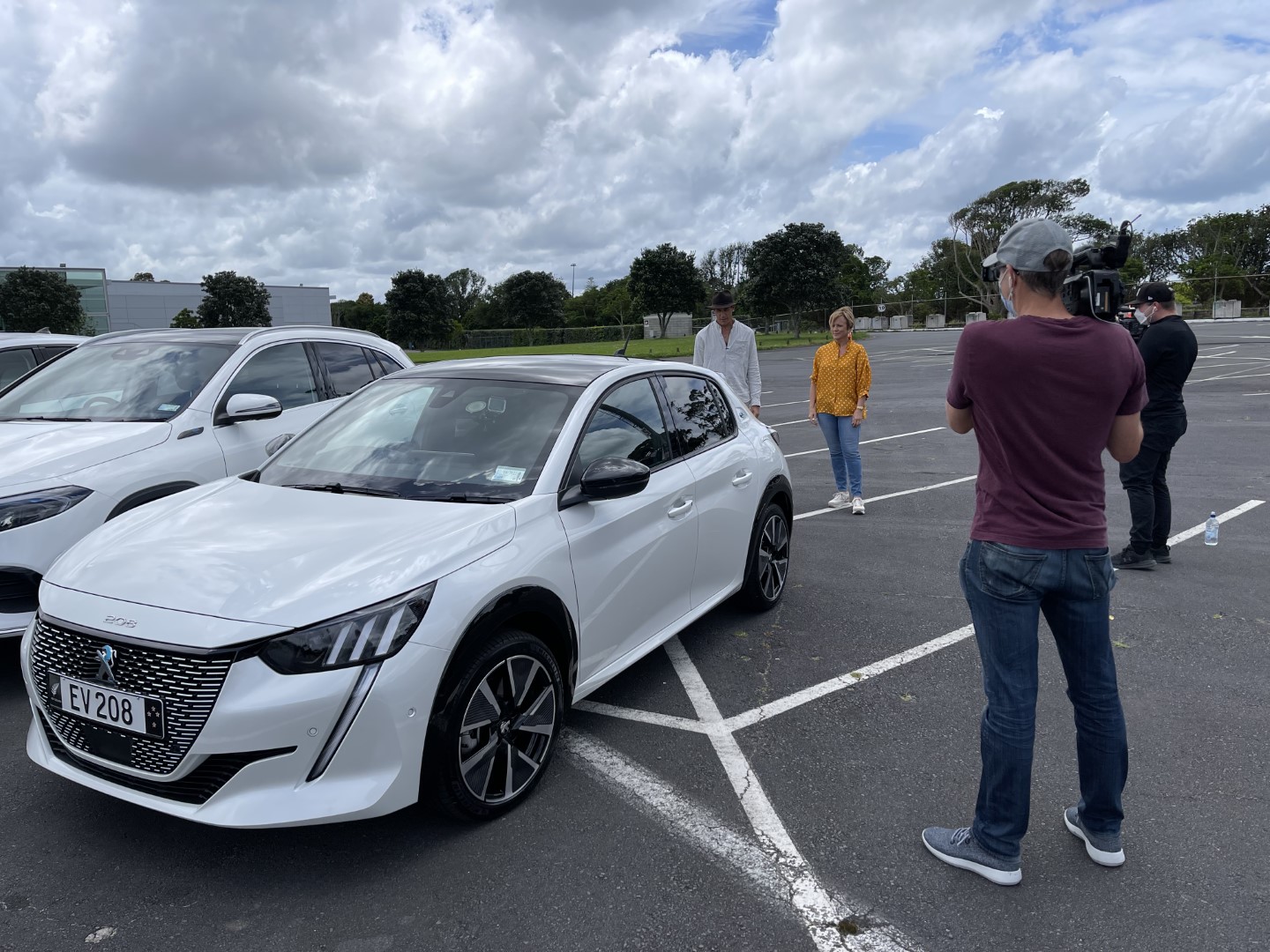
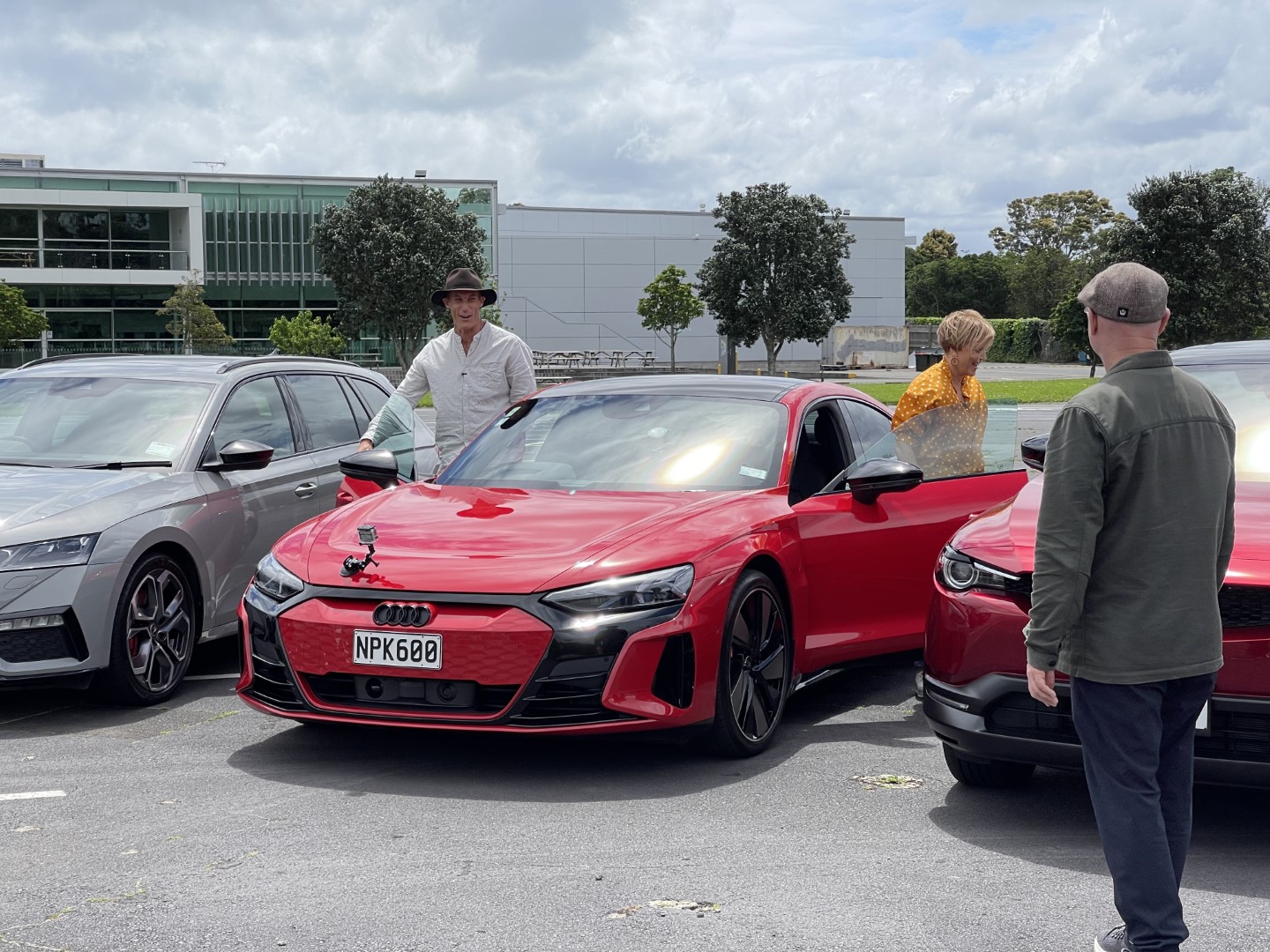
Filming for Seven Sharp segment

Variants within the Ford Escape, Kia Sorento and Skoda Octavia ranges are plug-in hybrids that combine internal combustion power with battery-electric power, and each has the ability to cover around 50km on electric power alone on a single battery charge. The latest Toyota Highlander is offered here in non-plugged hybrid guise for the first time, while the Toyota Yaris GR is a highly focused, pure petrol performance machine.

Six of the finalists are able to attract subsidies of up to $8,625 under the government’s Clean Car Discount scheme.

Back in 2015 guild members voted the BMW i3 as their first-ever electric-powered Car of the Year. More recently, pure-electric models – the Jaguar i-Pace and Mercedes EQC – have scooped the New Zealand Car of the Year in both 2019 and 2020.

“Obviously those previous pure-electric title winners are vehicles from recognised luxury brands, and both of the most recent winners carry price tags well in excess of $100,000,” says New Zealand Motoring Writers’ Guild President, Richard Edwards.

“What is particularly significant in this year’s list of finalists is the presence of electric vehicles across a range of prices. Five of this year’s pure electric and plug in finalists are available at prices below the $80,000 threshold that allows them to qualify for the Government’s Clean Car Discount scheme.

The award’s winner will be decided by the Guild’s two-dozen voting members over the coming months and announced live on TVNZ One’s Seven Sharp programme in February next year. The finalists were revealed on tonight’s episode of the top-rating show.

Now entering its 34th year, New Zealand Car of the Year is the country’s most prestigious motoring award, being a truly national prize without commercial ties.

Guild members assess the finalists on a specified range of criteria spanning how the vehicle performs its intended role; its styling, interior design and accommodation; fit, finish and quality; ride and refinement; performance; road-holding and handling; value for money; active and passive safety and environmental responsibility.